
The Moment Most Business Owners Miss When They Ask for Google Reviews
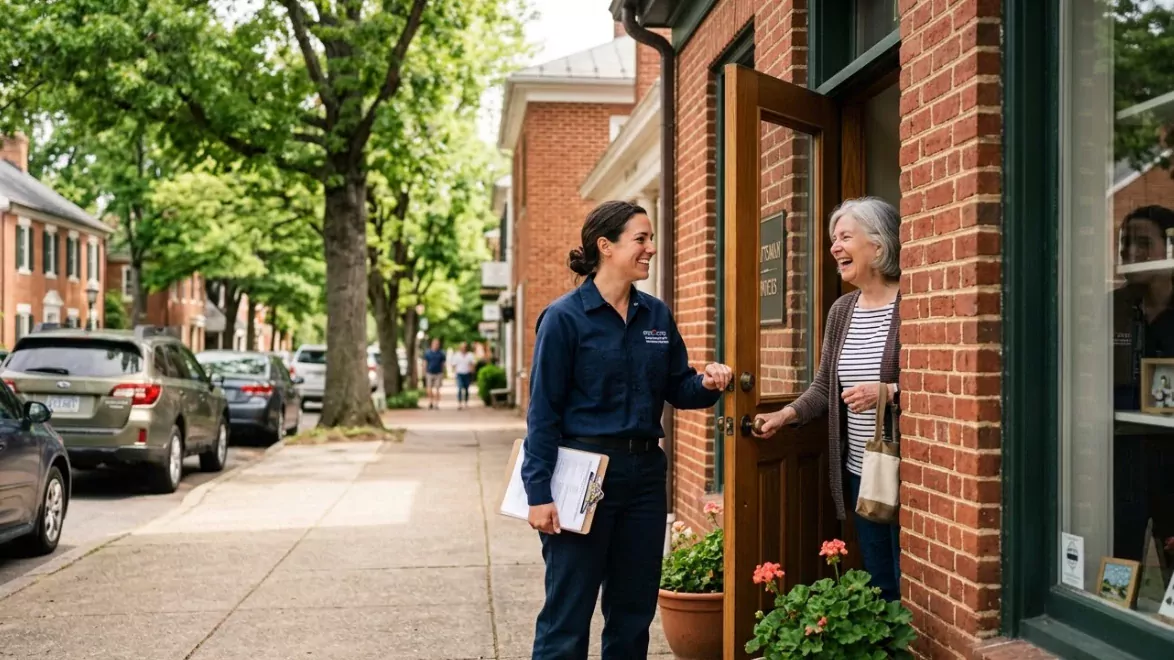
Driving down Commerce Street last Tuesday, I noticed a Virginia Episcopal School alumni bumper sticker on the truck in front of me — and then I noticed the magnetic company logo on the side. Local HVAC outfit. Later that day, the same company's Google profile came up in a conversation: four reviews, three stars, last review from 2023. Their trucks were everywhere. Their online reputation was invisible. Knowing how to ask for Google reviews — and actually doing it — is the gap separating those trucks from a 4.8-star profile that closes jobs before anyone picks up the phone.
Why Most Business Owners Ask for Reviews the Wrong Way
The instinct most business owners have when they think about asking for reviews is wrong. They imagine sending a mass email to their customer list with a subject line like "Leave us a review!" — and then feeling uncomfortable because it seems pushy. So they don't send it. Or they send it and get a one-percent response rate and give up.
The discomfort is real, but it's pointing at the wrong problem. The issue isn't asking — it's asking badly. A review request that feels awkward usually lacks three things: the right timing, a personal connection to the actual experience, and a frictionless path to leaving the review. Fix those three things and asking for reviews stops feeling like a sales pitch and starts feeling like a natural follow-up to good work.
How to ask for Google reviews in a way that actually works comes down to one principle: meet people at the peak of their satisfaction, give them a reason beyond your own benefit, and make the process take less than thirty seconds. When all three are present, most customers who had a good experience will follow through. According to Podium's guide to asking for Google reviews, the majority of customers who are asked will leave a review — the ask itself is the missing step for most businesses.
The Federal Hill neighborhood runs almost entirely on word-of-mouth among homeowners who've lived there for decades. A painting contractor who works that area told me something that stuck: "Every good job I finish, I ask in person first, then send a text with the link. I never skip the in-person part." That sequence — personal ask, then easy digital follow-through — is the template that works at every price point and in every trade.
One more thing worth naming: Google's guidelines prohibit review gating — the practice of filtering customers and only asking the happy ones to leave public reviews. You can ask all customers for honest feedback. You can't create a system that funnels only satisfied customers to Google while directing frustrated ones elsewhere. The distinction matters both ethically and practically, because Google actively penalizes review manipulation.
Timing Is the Variable Nobody Talks About
Watched a roofing crew wrap up a job in Boonsboro on a crisp fall morning a while back. The crew lead shook hands with the homeowner, chatted for a couple of minutes while the homeowner admired the finished work, then handed over a small card with a QR code. "If you liked the job, this goes straight to our Google page." That homeowner left a five-star review within the hour. The timing — standing in front of the finished work, visibly satisfied — was the reason.
Timing determines your response rate more than any other single variable. The best moment to ask for a review is the moment of highest satisfaction — typically right after the work is completed, the service is delivered, or the problem is solved. That window is often narrow. For a home service contractor, it's the moment the customer sees the finished result. For a restaurant, it's right after a great meal. For a medical or dental office, it's after a smooth, painless appointment.
Wait too long and the emotional peak has passed. A customer who was delighted on Tuesday may feel neutral about the experience by Friday. The review they'd have written on the day of service would have been effusive and detailed. The one they write a week later — if they write one at all — is often a vague three-liner that doesn't tell the next potential customer anything useful.
When is the best time to ask for a Google review? The short answer: as soon as the customer demonstrates satisfaction — either verbally ("This looks great") or behaviorally (a handshake, a smile, an unprompted compliment). That signal is your green light. Waiting for a "better moment" usually means the moment never comes.
Timing also applies to follow-up. If a customer didn't leave a review within 48 hours of the in-person ask, a single text follow-up with the direct Google review link is entirely appropriate. One follow-up, with the link, personalizing it to their specific job — that's the full system. Beyond one follow-up, the ask starts to feel like pressure, and pressure produces resentment, not reviews.
The Channels That Actually Generate Reviews in 2026
The business with the most Google reviews in my section of town right now is a plumbing company that does exactly one thing: sends a text message with a review link within two hours of completing every job. No email campaign. No QR codes on invoices. Just a single SMS, personalized to the job, sent while the customer is still thinking about how their water heater works again.
Text message is the highest-converting channel for review requests for most local service businesses — the open rates are dramatically higher than email, and the frictionlessness of clicking a link in a text message removes the biggest barrier most customers face. The key is keeping the message short, personal, and direct. Something like: "Hi Sarah — it was great getting your heat pump running today. If you have a minute, here's a direct link to leave us a review on Google: [link]. It really helps our small business." That's the whole message.
Email works well for businesses with longer customer relationships — financial services, dentists, veterinarians — where a thoughtful, slightly longer message feels appropriate. The subject line needs to be specific enough to signal personal attention without triggering spam filters. "Your experience with us last Tuesday" outperforms "Leave us a review" every time because it signals the email is about their specific interaction, not a blast to a list.
| Request Channel | Best For | Typical Response Rate | Key Requirement |
|---|---|---|---|
| In-person ask + follow-up text | Home services, trades, retail | Highest | Direct link sent same day |
| SMS only | Service-area businesses | High | Prior consent to text; sent within 2 hrs |
| Professional services, healthcare | Moderate | Personalized subject line, direct link | |
| QR code (in-person/print) | Restaurants, retail, waiting areas | Low-moderate | Prominent placement + verbal prompt |
| Invoice or receipt insert | Any business with paper billing | Low | Short URL or QR code; clear call to action |
In-person asking plus a digital follow-up is consistently the highest-converting approach across every type of local service business. The face-to-face moment creates the emotional connection; the text or email provides the frictionless path. Neither alone performs as well as the combination. The systems local businesses use to generate Google reviews consistently almost always include both components working together.
The one thing that tanks response rates regardless of channel: making it complicated. If a customer has to search for your business on Google, find the reviews tab, and figure out how to leave a review from scratch, most won't bother. Give them a direct link that opens your Google review form in one tap. That link is available for free through your Google Business Profile — there's no reason not to have it in your follow-up messages.
What to Actually Say When You Ask
Standing in line at The Cavalier Store one afternoon, I overheard a guy on the phone with what sounded like a customer — finishing up a landscaping project, wrapping the call, and then genuinely stumbling when he tried to ask for a review. "Um, so, if you wanted to, like, leave us something on Google, that would be, you know, great." The customer said "sure" in the tone of someone who absolutely wasn't going to do it.
The words you use matter more than most business owners realize. A great ask is confident, brief, specific to the customer's experience, and explains why it matters. A weak ask is tentative, generic, and puts the burden of figuring out why it matters on the customer. The difference in response rates between those two approaches is significant.
A strong in-person ask sounds something like: "I'm really glad the job came out well for you. If you're happy with how it went, a Google review from you would mean a lot — it helps other homeowners in the area find us when they need help." That's three elements working together: acknowledgment of their satisfaction, a clear request, and a reason that benefits people like them. No hedging, no over-explaining, no apology for asking.
Should I offer an incentive for leaving a Google review? No — and this is important. Google's guidelines explicitly prohibit offering rewards, discounts, or anything of value in exchange for reviews. Asking is always allowed. Incentivizing is not. The same guideline applies to asking only happy customers while steering unhappy ones elsewhere. Both practices can result in reviews being removed or your Google Business Profile being penalized.
For follow-up texts, brevity is the whole game. One sentence acknowledging the job, one sentence making the ask, one direct link. Under 160 characters if possible. The more the message reads like a personal note from a real person, and the less it reads like marketing copy, the higher your response rate. Customers can feel the difference between a template and a text someone actually wrote for them — even when the template is well-crafted. Adding the customer's name and one specific detail about their job closes that gap enough to matter.
Staying consistent is the harder part of this for most businesses. The best review generators I've seen have built the ask into their operational routine — it's part of the job close, not a separate marketing task that gets skipped when things get busy. The businesses that dominate their local search results treat review generation like any other repeatable process: documented, practiced, and done every single time.
Frequently Asked Questions About Asking for Google Reviews
Is it against Google's rules to ask customers for reviews?
No — Google explicitly allows businesses to ask customers for honest reviews. What Google prohibits is incentivizing reviews (offering discounts or rewards in exchange), review gating (only asking customers you know are happy), and fake or purchased reviews. Asking every customer for an honest review after their experience is fully compliant with Google's policies and is the recommended approach for building a genuine review profile.
What's the best way to get a Google review link to send to customers?
Log into your Google Business Profile, go to the "Ask for reviews" section, and Google will generate a direct link specifically for your business. This link opens your Google review form directly — no searching, no extra steps. Copy that link and use it in every text and email review request you send. You can also shorten it with a URL shortener for cleaner text messages, or generate a QR code for printed materials.
How many Google reviews do I need to rank in the local map pack?
Google doesn't publish a specific minimum, and review count alone isn't a ranking factor — it's part of a broader set of review signals that includes recency, rating quality, and the presence of owner responses. That said, businesses with more recent, high-quality reviews consistently outperform competitors with fewer or older reviews in the local pack. Getting to double digits, then growing steadily from there, is more sustainable than trying to reach a target number quickly and then stopping.
What should I do if a customer leaves a negative Google review?
Respond promptly, professionally, and without defensiveness. Acknowledge the customer's experience, apologize where appropriate, and offer a direct path to resolve the issue offline. A thoughtful response to a negative review often impresses potential customers more than a five-star review does — it signals that you take feedback seriously. For resources on structuring those responses, building a compliant review generation system in Lynchburg covers both the asking and responding sides of the process.
Can I ask past customers for reviews, or only recent ones?
You can ask past customers, though the response rate drops significantly as time passes. A customer from two years ago has a much weaker emotional connection to the experience than one from last week. If you do reach out to past customers, personalize the message with a specific reference to the job or service you provided for them. Generic blast emails to old customer lists tend to generate very low response rates and can feel intrusive if the relationship has gone cold.
Should I respond to positive Google reviews, or just negative ones?
Respond to both — responding to positive reviews signals to Google that your profile is actively managed, and it creates a visible record of appreciation that future customers will notice. Keep positive review responses brief and personal: thank the reviewer by name, reference something specific from their review, and invite them back if that applies to your business. A two-sentence response is enough. Responding to every positive review within a day or two also tends to increase the likelihood that the reviewer recommends you directly to others.
How often should I be asking customers for Google reviews?
Ask every customer, every time — that's the standard for businesses with consistently high review volume. The businesses I've seen accumulate hundreds of reviews without shortcuts treat it as a standard close-of-job process, not an occasional campaign. Consistency over time is what separates businesses with 12 reviews from businesses with 240 reviews in the same market. One ask per customer interaction, with a single follow-up if they haven't responded within 48 hours, is the sustainable rhythm that produces compounding results.
Building the Habit That Builds the Profile
Asking for Google reviews stops feeling awkward the moment it becomes routine. That's the honest truth I've heard from nearly every business owner who went from sporadic, nervous asks to a consistent system. It's not a personality trait or a sales skill — it's a habit that gets easier every time you do it.
The mechanics are simple: ask at the right moment, keep the words direct and human, give them a link that makes the process effortless, send one follow-up if they don't respond. That's the whole system. The businesses in Lynchburg that are pulling away from competitors on Google Maps aren't doing anything magical — they're doing the simple thing consistently, and the reviews compound over time into a profile that makes the phone ring before you've said a word.
If you've been meaning to get a real review generation process in place — or if you're not sure why your reviews have stalled out while a competitor's keep climbing — the team at Think Local Agency helps local businesses in the Lynchburg area build these systems from the ground up. Call us at 434-215-9139 and let's talk through what's working (and what isn't) for your profile specifically.

Jesse Griffiths, founder of Think Local Agency
Hey there — I’m Jesse. I’ve been helping small businesses grow their online presence for over 10 years, and I started Think Local Agency because I believe every business deserves honest, straightforward marketing that actually gets results. When we work together it’s just you and me — no account managers, no layers, no feeling like “just another client.” I still answer my own phone and reply to my own emails because your success matters to me personally.

Privacy & Policy
Last Updated: May 24, 2023
This Privacy Policy explains how Think Local Agency (hereafter “we”, “us”, “our”) collects, uses, shares, and protects your personal information when you use our website, thinklocalagency.com. Please read this policy carefully to understand our practices regarding your personal information and how we will treat it.
Information We Collect
When you visit our website, we may collect the following information:
- Personal Information: This may include your name, address, email address, phone number, and other personal information you voluntarily provide to us when you request a quote, schedule a service, or contact us.
- Non-Personal Information: We collect non-personal information such as your browser type, IP address, operating system, and the pages you visited on our site.
How We Use Your Information
We use the information we collect to:
- Provide, maintain, improve, and promote our services
- Communicate with you about your requests, orders, and questions
- Personalize your user experience on our website
- Analyze website usage for internal marketing and quality control purposes
Sharing Your Information
We do not sell or rent your personal information to third parties. We may share your information with service providers that assist us with our business operations, such as IT and customer service, under strict data protection requirements.
We may also disclose your personal information if required by law or in the event of a business transfer (e.g., sale, merger, or acquisition).
Cookies
Our website uses “cookies” to enhance your experience. Cookies are small files stored on your device that allow us to recognize you when you return to our site. You can choose to accept or decline cookies by modifying your browser settings.
Protecting Your Information
We implement a variety of security measures to maintain the safety of your personal information. These include encryption, secure server environments, and other current technologies. However, please note that no method of transmission over the internet is 100% secure.
Children’s Privacy
Our website is not intended for use by individuals under the age of 18. We do not knowingly collect personal information from children under 13. If we discover that a child under 13 has provided us with personal information, we will promptly delete it.
Changes to This Policy
We may periodically update this policy. If we make significant changes, we will notify you through our website or via email.
Contact Us
If you have any questions or concerns about our Privacy Policy, please contact us at 434-215-9139.
By using our site, you consent to our Privacy Policy. If you do not agree with any part of this Policy, please do not use our website.
Terms of Services
Terms Of Service
Last Updated: May 24, 2023
Welcome to Think Local Agency (hereinafter “we”, “us”, “our”). The following Terms of Service (the “Terms”) govern your access to and use of our website thinklocalagency.com (the “Website”) and any services provided (the “Services”).
By using our Website and Services, you agree to be bound by these Terms. If you do not agree to these Terms, please do not use our Website or Services.
1. Use of our Website
You are permitted to use our Website for your personal, non-commercial use, or legitimate business purposes, provided your activities are lawful and in accordance with these Terms. You are not permitted to use our Website for any illegal or harmful purpose, or in any manner that could interfere with the operation of our Website.
2. User Content
If you submit or upload any content on our Website, you agree not to upload any content that is offensive, defamatory, or illegal, or that infringes on the rights of others. We reserve the right to remove or modify any content that we believe violates these standards or any other provisions of these Terms.
3. Intellectual Property
All content and materials available on our Website are owned by us or our licensors, and are protected by copyright, trademark, and other intellectual property laws. You may not use, copy, modify, distribute, or create derivative works from any part of our Website without express consent from us.
4. Service Appointments and Cancellations
When you book a service appointment, you agree to provide truthful and accurate information. You also agree to promptly notify us of any changes to your appointment.
In case of cancellations, please inform us at least 24 hours before your scheduled appointment. We reserve the right to charge a cancellation fee for any no-shows or late cancellations.
5. Disclaimers and Limitations of Liability
Our Website and Services are provided “as is” without any guarantees or warranties, expressed or implied. We do not warrant that the operation of our Website will be uninterrupted, error-free, or completely secure.
To the maximum extent permitted by law, we will not be liable for any direct, indirect, punitive, or consequential damages that may result from the use or inability to use our Website or Services, even if we have been advised of the possibility of such damages.
6. Changes to these Terms
We may periodically update these Terms. Any changes will be posted on this page, and by continuing to use our Website, you agree to be bound by any modifications to these Terms.
7. Governing Law
These Terms are governed by the laws of Virginia, USA. Any dispute arising from these Terms shall be resolved exclusively in the courts of Lynchburg, Virginia.
8. Contact Us
If you have any questions or concerns about these Terms, please contact us at 434-215-9139.