
What Nobody Tells Small Business Owners About How Long Local SEO Takes to Work
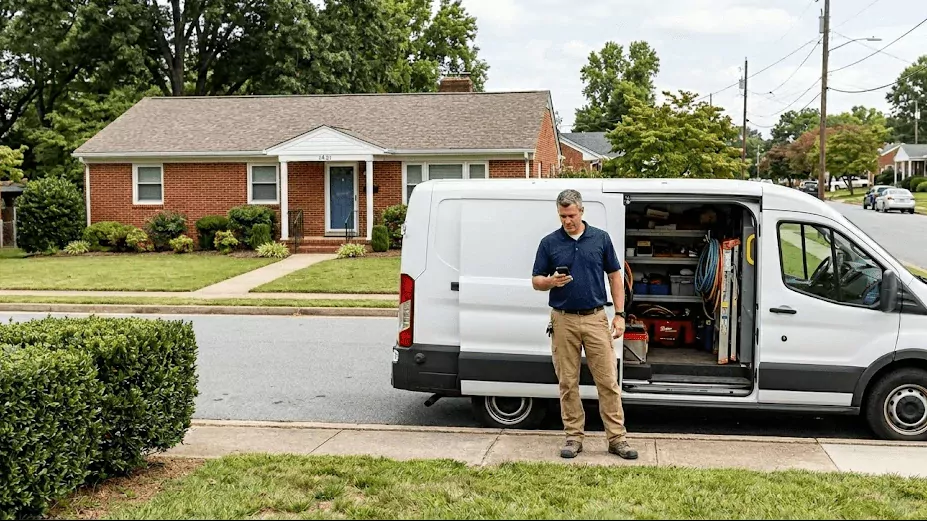
The Question Every Small Business Owner Asks in Month Two
You're sitting at The Muse Coffee Co. on Main Street, two cups in, scrolling your Google Search Console for the fourth time that week. The numbers haven't moved the way you expected. You started local SEO three months ago — paid someone, changed things on your website, claimed your Google Business Profile — and you're still not showing up the way you thought you would. So you type the question you've been avoiding: how long does local SEO take to work?
Here's the part most agencies skip: the honest answer is "longer than the sales pitch suggested." But that doesn't mean nothing is happening. It means most business owners are looking for the wrong signal at the wrong time.
How long does local SEO take to work for most small businesses? The direct answer: early indicators typically appear within 60 to 90 days for a well-optimized Google Business Profile and a site without major technical issues. Meaningful ranking movement for competitive keywords — the kind that drives consistent calls — usually takes four to six months. Sustained results that compound over time take longer still.
That timeline isn't a hedge. It reflects how Google's systems actually crawl, assess, and trust new signals. Understanding what's happening in each window makes the wait less frustrating and helps you tell the difference between an SEO campaign that's working slowly and one that isn't working at all.
The gap between "we started" and "we're ranking" is where most local business owners lose confidence — and where most poor-fit decisions get made. What actually drives the pace of results is less obvious than most people expect.
Why How Long Local SEO Takes Depends on Factors You Control
A roofing contractor in the Odd Fellows Road corridor asked me once why his competitor — same size company, same part of town — was showing in the local pack while he wasn't. Both had Google Business Profiles. Both had websites. The difference came down to three things: citation consistency, review velocity, and how long the competitor's profile had been actively maintained. His competitor had an 18-month head start on trust signals that Google couldn't see just from looking at either site.
The factors that accelerate the local SEO timeline aren't mysterious. They're just unglamorous.
- Domain and profile age: A business that's been online for three years starts with more baseline authority than one that launched last month. Google extends trust incrementally.
- Existing technical issues: Slow page load, crawl errors, or a site architecture that buries key service pages can delay rankings for months — not because the SEO work is wrong, but because Google is still processing it correctly.
- Review recency and volume: A profile with 47 reviews and the most recent one from 14 months ago signals stagnation. Active review generation creates fresh trust signals that accelerate local pack movement.
- Citation accuracy: If your business name, address, and phone number appear differently across directories — even minor variations — Google's confidence in your location data drops.
- Competition density: Ranking for "plumber Lynchburg" competes against businesses that have been building authority for years. Ranking for "emergency water heater repair Campbell County" is a much shorter climb.
According to a comprehensive SEO timeline guide from Search Engine Land, SEO typically takes three to six months to produce measurable results, with the timeline tied directly to the site's existing authority, how quickly changes get implemented, and how long Google takes to reprocess updated pages. For local businesses specifically, well-optimized content can show early signals before that window closes — but only when the foundation is solid.
The controllable factors matter more than most people realize. A business that fixes citation inconsistencies, builds reviews steadily, and publishes locally-relevant content every month will outpace a competitor that did a one-time GBP optimization and then went quiet — regardless of who started first.
What's less understood is that the competitive landscape you're entering isn't static — your competitors are still building signals while you wait, which means the pace of your own effort directly shapes how the gap narrows or widens.
Reading the Milestones: What Good Progress Actually Looks Like Month by Month
The most common mistake I see local business owners make is treating the first 90 days like a trial period — if the phone isn't ringing by then, the strategy is failing. That's the wrong frame entirely. The first 90 days are an infrastructure phase, not a results phase, and knowing what to look for in each window changes how you read progress.
Here's a realistic breakdown of what legitimate SEO momentum looks like across the first year for a small service business starting from a modest baseline:
| Timeframe | What You Should See | What It Means |
|---|---|---|
| Weeks 1–4 | GBP fully built out; on-page fixes implemented; citations audited | Foundation work — not visible yet, but necessary |
| Months 2–3 | Impressions in Search Console rising; long-tail keyword appearances begin; GBP views ticking up | Google is crawling and processing the changes — early trust building |
| Months 4–6 | Local pack appearances for lower-competition queries; organic clicks beginning; first calls attributable to search | Strategy is gaining traction — primary keyword rankings still fluctuating |
| Months 7–12 | Consistent local pack presence; competitive keyword movement; measurable lead flow from organic search | Compounding authority — each new review and piece of content reinforces what's already working |
| Month 12+ | Stable rankings for core keywords; consistent call volume; Google treating the site as an established local authority | Results compound — harder to displace, easier to grow |
A tile contractor near Sweet Briar College's service area in Amherst County told me he almost quit at month four. He was getting impressions but not clicks, and he'd started questioning whether local SEO was even worth it for a trade business. By month seven, he was averaging six inbound calls a week from organic search alone — a 90-day slow stretch had turned into his best-performing lead channel.
The key diagnostic question isn't "am I ranking yet?" — it's "are my impressions and GBP profile interactions trending upward?" Those upstream signals almost always precede ranking movement by four to eight weeks. If they're moving, the ranking will follow.
But understanding the timeline is only half the equation — knowing what to do when progress stalls is where most businesses either recover or give up too early.
What to Do When Local SEO Progress Stalls Before You Expected
Stalled progress isn't always a sign that the strategy is broken. Sometimes it's a sign that one specific variable is creating a ceiling, and the entire effort is compounding around it without resolution. I've sat through enough performance conversations with local businesses on local SEO strategies to know that most stalls trace to one of three sources: an unresolved technical issue, a review gap compared to competitors, or content that isn't signaling relevance for the right terms.
Why is my Google Business Profile not showing up after optimizing it? The most common culprit is category misalignment or proximity weighting. Google's local pack is heavily influenced by the physical distance between the searcher and the business — if someone searches "roofer near me" from a neighborhood where your competitors are physically located and you're five miles away, category optimization alone won't close that gap. Service area pages and locally-relevant content become the tie-breaker.
A diagnostic checklist worth running if progress has plateaued:
- Check Search Console for manual actions or coverage issues — a crawl block can suppress everything else
- Compare your review velocity to the top three local pack competitors — if they're getting two to three new reviews a week and you're getting one a month, the gap widens every day
- Audit your primary business category on GBP — secondary categories should support your main service, not dilute it
- Look at page speed on mobile — in 2026, Google's core web vitals scoring still influences how quickly new content gets indexed and how it performs once ranked
Sometimes the stall has nothing to do with your strategy. Google's algorithm updates — and there were several significant ones through 2025 — can temporarily shuffle local pack results even for well-optimized profiles. The businesses that held their positions through volatility were the ones that had been consistently building signals for at least six months before the updates landed.
Can I speed up how long local SEO takes? Within limits, yes. Accelerating review generation through a structured ask process, publishing locally-relevant service content consistently, and fixing technical issues immediately rather than queuing them all compress the timeline. What doesn't work is trying to manufacture authority shortcuts — review gating, keyword-stuffed business names, or inflated service areas. Google's 2025 spam enforcement tightened considerably, and profiles that relied on those tactics lost visibility, often right as their legitimate signals were beginning to compound.
For businesses following a structured SEO timeframe approach, stalls are expected — the question is whether you have the framework to diagnose and address them methodically rather than abandoning strategy mid-build.
Knowing why progress stalls is useful — but the more unsettling question for most business owners is what happens to all of that built-up authority if they stop the work.
Frequently Asked Questions About Local SEO Timelines
How long does local SEO take to show results for a new business?
A brand-new business with a fresh domain and a newly created Google Business Profile will typically see early search appearances within three to four months when the fundamentals are done correctly — accurate business information, consistent citations, and an initial base of genuine reviews. Meaningful local pack presence for competitive terms usually takes six to nine months. The new business timeline is longer because Google extends trust incrementally to profiles and domains it hasn't seen before.
What's the difference between local SEO results and regular organic SEO results?
Local SEO results primarily affect your visibility in the local pack (the map-based results near the top of a Google search) and in proximity-triggered searches like "near me" or searches with a city name. Organic SEO results affect where your website ranks in the standard blue-link results below the map. Local SEO tends to produce visible movement faster because there are fewer competing signals and the ranking factors are more directly tied to actions you control — reviews, GBP completeness, and citation accuracy.
How do I know if my local SEO is actually working?
The most reliable early indicators are Google Business Profile impressions and search appearance data in Google Search Console. Both update regularly and show whether Google is surfacing your business for relevant searches, even before that visibility translates to clicks or calls. Tracking these metrics from day one gives you a baseline — upward trends in impressions almost always precede ranking improvements by several weeks. If impressions are flat or declining after three months of active work, that's the signal to audit the strategy, not wait longer.
Is local SEO worth it for a small business with a tight budget?
For most local service businesses, organic search remains one of the highest-intent lead channels available — someone searching "HVAC repair near me" is ready to hire, not just browsing. The challenge is that local SEO requires consistent ongoing investment, not a one-time setup. A modest, consistent monthly effort — steady review generation, regular content publishing, citation maintenance — outperforms a large one-time optimization followed by months of inactivity. The compounding nature of the results means early consistency pays dividends well beyond the months when you're actively spending.
What happens if I stop doing SEO after I start ranking?
Rankings built on genuine authority don't disappear immediately when you pause — but they do erode. Competitors who continue building reviews, publishing content, and maintaining their GBP will gradually accumulate more trust signals than a paused profile. The erosion pace depends on how competitive your market is and how much of a lead you built before pausing. In a low-competition market, you might hold strong positions for six to twelve months. In a competitive category like roofing or HVAC, you could see movement within two to three months of going quiet.
Why does local SEO take longer for some businesses than others?
The primary variables are domain age, existing authority, competitive density, and the severity of any technical issues that need resolving before positive signals can register. A business that's been online for five years with a consistent citation footprint and 80 reviews starts with substantial accumulated authority — a new site in the same category starts from zero. The gap in starting position directly translates to a gap in timeline. There's no shortcut around the trust-building phase, but there are ways to move through it more efficiently with the right foundation work.
How does the local pack algorithm decide when to show a business?
Google's local pack ranking is driven by three broad factors: relevance (how well your profile and website match the search intent), distance (proximity of your business to the searcher's location), and prominence (how well-known and trusted your business appears based on reviews, citations, links, and activity). No single factor dominates — a business with excellent reviews but poor category relevance will lose to a competitor whose profile is tightly aligned with what the searcher needs. All three levers have to be pulling in the same direction for sustained local pack visibility.
The Patience Part Is Real — and So Is the Payoff
I used to walk past the Bootleggers Bar & Grill crowd spilling onto Commerce Street on a Friday evening and think about how many of those people had just searched for "places near me" to end up there. That's organic search doing its job — quiet, invisible, and already decided before anyone walked through the door. That's what local SEO is building toward for every business that commits to it long enough to see the compounding effect.
The timeline is real. Three to six months for early traction, six to twelve for consistent lead flow, a year-plus for the kind of authority that's hard to displace. None of that is a slow strategy — it's just a different kind of growth than paid ads, where you rent visibility by the day instead of building something that works after you stop paying for it.
Is local SEO worth it for a small business? The most honest answer I can give is this: for service businesses where trust and proximity matter to the buyer — contractors, medical practices, restaurants, repair shops — organic local visibility is one of the few marketing channels where your investment builds equity instead of evaporating the moment the budget does.
If you're a service business in Lynchburg trying to understand where your local SEO effort actually stands — or why the results haven't matched the timeline you were given — the team at Think Local Agency is happy to take a look. Give us a call at 434-215-9139 and we can walk through what the data actually shows, what's likely causing any delays, and what a realistic roadmap looks like for your specific market and category. No guesswork, no timeline inflation — just the honest picture.

Jesse Griffiths, founder of Think Local Agency
Hey there — I’m Jesse. I’ve been helping small businesses grow their online presence for over 10 years, and I started Think Local Agency because I believe every business deserves honest, straightforward marketing that actually gets results. When we work together it’s just you and me — no account managers, no layers, no feeling like “just another client.” I still answer my own phone and reply to my own emails because your success matters to me personally.

Lynchburg, VA ~ 434-215-9139
Privacy & Policy
Last Updated: May 24, 2023
This Privacy Policy explains how Think Local Agency (hereafter “we”, “us”, “our”) collects, uses, shares, and protects your personal information when you use our website, thinklocalagency.com. Please read this policy carefully to understand our practices regarding your personal information and how we will treat it.
Information We Collect
When you visit our website, we may collect the following information:
- Personal Information: This may include your name, address, email address, phone number, and other personal information you voluntarily provide to us when you request a quote, schedule a service, or contact us.
- Non-Personal Information: We collect non-personal information such as your browser type, IP address, operating system, and the pages you visited on our site.
How We Use Your Information
We use the information we collect to:
- Provide, maintain, improve, and promote our services
- Communicate with you about your requests, orders, and questions
- Personalize your user experience on our website
- Analyze website usage for internal marketing and quality control purposes
Sharing Your Information
We do not sell or rent your personal information to third parties. We may share your information with service providers that assist us with our business operations, such as IT and customer service, under strict data protection requirements.
We may also disclose your personal information if required by law or in the event of a business transfer (e.g., sale, merger, or acquisition).
Cookies
Our website uses “cookies” to enhance your experience. Cookies are small files stored on your device that allow us to recognize you when you return to our site. You can choose to accept or decline cookies by modifying your browser settings.
Protecting Your Information
We implement a variety of security measures to maintain the safety of your personal information. These include encryption, secure server environments, and other current technologies. However, please note that no method of transmission over the internet is 100% secure.
Children’s Privacy
Our website is not intended for use by individuals under the age of 18. We do not knowingly collect personal information from children under 13. If we discover that a child under 13 has provided us with personal information, we will promptly delete it.
Changes to This Policy
We may periodically update this policy. If we make significant changes, we will notify you through our website or via email.
Contact Us
If you have any questions or concerns about our Privacy Policy, please contact us at 434-215-9139.
By using our site, you consent to our Privacy Policy. If you do not agree with any part of this Policy, please do not use our website.
Terms of Services
Terms Of Service
Last Updated: May 24, 2023
Welcome to Think Local Agency (hereinafter “we”, “us”, “our”). The following Terms of Service (the “Terms”) govern your access to and use of our website thinklocalagency.com (the “Website”) and any services provided (the “Services”).
By using our Website and Services, you agree to be bound by these Terms. If you do not agree to these Terms, please do not use our Website or Services.
1. Use of our Website
You are permitted to use our Website for your personal, non-commercial use, or legitimate business purposes, provided your activities are lawful and in accordance with these Terms. You are not permitted to use our Website for any illegal or harmful purpose, or in any manner that could interfere with the operation of our Website.
2. User Content
If you submit or upload any content on our Website, you agree not to upload any content that is offensive, defamatory, or illegal, or that infringes on the rights of others. We reserve the right to remove or modify any content that we believe violates these standards or any other provisions of these Terms.
3. Intellectual Property
All content and materials available on our Website are owned by us or our licensors, and are protected by copyright, trademark, and other intellectual property laws. You may not use, copy, modify, distribute, or create derivative works from any part of our Website without express consent from us.
4. Service Appointments and Cancellations
When you book a service appointment, you agree to provide truthful and accurate information. You also agree to promptly notify us of any changes to your appointment.
In case of cancellations, please inform us at least 24 hours before your scheduled appointment. We reserve the right to charge a cancellation fee for any no-shows or late cancellations.
5. Disclaimers and Limitations of Liability
Our Website and Services are provided “as is” without any guarantees or warranties, expressed or implied. We do not warrant that the operation of our Website will be uninterrupted, error-free, or completely secure.
To the maximum extent permitted by law, we will not be liable for any direct, indirect, punitive, or consequential damages that may result from the use or inability to use our Website or Services, even if we have been advised of the possibility of such damages.
6. Changes to these Terms
We may periodically update these Terms. Any changes will be posted on this page, and by continuing to use our Website, you agree to be bound by any modifications to these Terms.
7. Governing Law
These Terms are governed by the laws of Virginia, USA. Any dispute arising from these Terms shall be resolved exclusively in the courts of Lynchburg, Virginia.
8. Contact Us
If you have any questions or concerns about these Terms, please contact us at 434-215-9139.