
Anonymous Google Reviews Are Here — What It Actually Means for Your Lynchburg Business
What Changed — and Why Google Did It
The coffee at Ironclad was still too hot to drink when the contractor sitting across from me pulled up his Google Business Profile and said he'd gotten three reviews overnight from names he'd never seen — not fake-looking names, just unfamiliar ones. "How do I know these are even real customers?" he asked. That question, I realized, was about to become a lot more common.
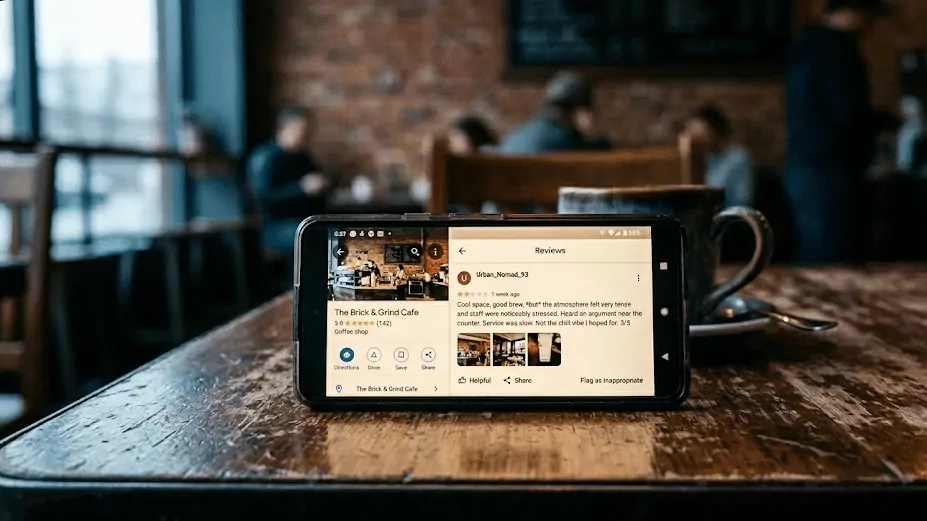
In November 2025, Google quietly rolled out one of the most significant changes to its review system in years. Users can now set a custom display name and profile picture — a pseudonym — that appears publicly on all their Google Maps contributions, including reviews left on anonymous Google reviews 2026 listings. The real account remains linked internally. What the public sees is entirely up to the reviewer.
Google had removed anonymous reviews back in 2018, specifically to fight spam and fake reviews. The reversal — technically pseudonymity, not full anonymity — signals a shift in priorities. Privacy concerns had been quietly suppressing review volume, particularly in industries where customers didn't want their names attached to the services they'd used.
The rollout began in November 2025 and was widely available across the US by early 2026. According to Whitespark's 2026 Local Search Ranking Factors study, review count and recency remain two of the strongest local ranking signals — which makes this update directly relevant to any business actively managing its Google presence.
What does this mean in practical terms? A patient who saw a specialist near Daniels Hill and wanted to leave an honest review could now do so without broadcasting that medical visit to everyone who searches their name. A client of a financial advisor, a counselor, a family law attorney — anyone in a sensitive situation — suddenly has a reason to share feedback they previously swallowed.
| Before November 2025 | After November 2025 |
|---|---|
| Reviewer's real Google account name shown publicly | Reviewer can display a custom pseudonym or nickname |
| Customers in sensitive industries often skipped leaving reviews | Privacy-sensitive customers have a clear path to share honest feedback |
| Business owners could often identify a reviewer from their real name | Business owners see only the pseudonym — same as the public |
| Workarounds required a secondary Google account | Custom display name set directly in Google Maps profile settings |
| Google's spam filters relied heavily on account history signals | Spam detection unchanged — each review still tied to a real Google account |
What businesses haven't fully processed yet is that the name change applies retroactively. A reviewer who changes their display name will update all their past reviews to the new pseudonym — meaning a response you wrote to "John K." may now look like it was addressed to a stranger.
That retroactive element is one of several quirks in this rollout that local business owners need to understand before they show up in next month's reviews dashboard wondering why familiar names suddenly vanished.
What Anonymous Google Reviews 2026 Means for Review Volume
I've heard from a landscaper near Depot Grille who mentioned that two of his best longtime clients had never left him a Google review. Not because they were unhappy — but because one of them was a well-known local figure who didn't want strangers reading his endorsements online, and the other simply valued her privacy. Google's pseudonym option removes exactly that friction.
For most local trade businesses in Lynchburg — plumbers, electricians, HVAC contractors, roofers — the direct impact on review volume may be modest. Your customers aren't usually in legally or medically sensitive situations when they call about a leaky pipe. But even outside those industries, research suggests a meaningful share of customers who have never left a review cite privacy concerns as a factor. The pseudonym feature removes that barrier for them too.
The industries likely to see the largest lift are those where the service itself implies something personal: mental health providers, addiction treatment centers, fertility clinics, bankruptcy attorneys, divorce lawyers, financial advisors. In those fields, the update is significant. A mental health practice in the area could see meaningful review growth from clients who were willing to share feedback but unwilling to put their name on it publicly.
For any business that actively asks customers for reviews — through texts, QR codes, or follow-up emails — there's a simple opportunity here. Mention that customers can now leave feedback under a nickname if they prefer. That single sentence, added to your review request script, could convert customers who previously declined.
There's a flip side, though. Anonymity lowers inhibition in both directions. The same privacy protection that makes it easier for a satisfied patient to leave a positive review also makes it slightly easier for an unhappy customer — or a bad actor — to post a negative one without the social friction of having their name attached.
The key insight from the research on this update: the change doesn't alter Google's spam detection at all. Every review, pseudonymous or not, is still tied to a real Google account. Google's internal systems still analyze behavioral patterns, account history, and content signals. Spam that would have been caught before will still be caught — and that's worth understanding clearly before worry sets in about a wave of anonymous hit jobs on your profile.
How to Spot and Handle Reviews You Can't Identify
Not being able to match a reviewer's name to a face or a transaction is genuinely new territory for most business owners. I talked with a shop owner who said she used to use names as a memory trigger — "Oh, that's the one who came in Tuesday" — and now that signal is gone for pseudonymous reviewers. Here's how to adapt.
Can you flag an anonymous or pseudonymous review just because you don't recognize the name? No. Google's policy has always allowed reviews from anyone with a legitimate experience — including people who briefly called your business, walked in during posted hours, or interacted with your staff without completing a transaction. Not recognizing a name has never been grounds for removal, and that remains true now.
What you can flag is a review that violates Google's content policies. According to experts at GatherUp, reviews can be reported and removed when they contain spam, fake engagement, hate speech, misinformation, personal information, or off-topic content that doesn't reflect a real customer experience. A pseudonymous negative review that describes a plausible experience? That's not removable. A pseudonymous review that contains what looks like competitor content, gibberish, or references a service you don't offer? That's flaggable.
The practical approach: treat every pseudonymous review the way you'd treat a review from a name you simply don't remember. Respond professionally. Address the specific concern. If the content is clearly fabricated — references a service or product you don't offer, contains the same phrases showing up across competitor listings, or arrived in a suspicious cluster — document it, flag it, and follow up with Google Business Support if it isn't resolved.
For deeper context on how to identify and flag fake reviews, this guide to spotting fake Google reviews covers the red flags that hold up whether a review is posted under a real name or a pseudonym.
One more practical note: if you respond to reviews by name — "Thanks, Sarah!" — you'll want to adjust that habit. When Sarah changes her display name to "Happy Customer," your old response will now read oddly. Start writing responses that acknowledge the experience rather than the person by name.
Updating Your Review Collection Strategy Right Now
The window to act on this is now, while most local competitors haven't adjusted their approach yet. I pulled up the review profiles of several Lynchburg-area service businesses recently, and the ones sitting at 3.8 or 4.1 stars were almost uniformly the ones that had stopped asking for reviews consistently at some point in the past year or two. Review recency matters — a profile with 80 reviews but none in the past six months sends a different signal than one with 40 reviews and a steady drip of recent ones.
Here's what a practical update to your review collection process looks like in 2026:
- Add one sentence to your review request text or email: something like "You can leave your review under a nickname if you prefer — just update your display name in Google Maps settings first." Keep it simple. Don't make it the focus of the ask.
- If you serve clients in privacy-sensitive categories — even partially — brief your front desk or team on the feature. The patient who hesitates at the checkout counter may just need to know the option exists.
- Don't change your core review generation strategy based on this update — the fundamentals haven't changed. Ask promptly after a positive experience, make it easy, and don't incentivize.
- Monitor your profile more closely for the first few months. A spike in pseudonymous reviews isn't automatically suspicious — but any sudden pattern shift is worth watching.
One nuance worth knowing: the display name change applies globally to a user's account, not to individual reviews. A customer can't choose to be anonymous on your listing but named on someone else's. That means someone who opts for a pseudonym is making a broader privacy choice — not singling out your business in any way.
The businesses that will benefit most from this update are the ones already asking for reviews consistently and who take the time to let customers know the option exists. The update doesn't solve a weak review strategy — it amplifies a good one.
Frequently Asked Questions About Anonymous Google Reviews
Are anonymous Google reviews real — or are they easier to fake now?
Pseudonymous reviews are just as real as named ones. Every review, regardless of display name, is still tied to a verified Google account. Google's spam detection systems continue to analyze account behavior, content patterns, and other signals to catch fake reviews — the public display name is the only thing that changed. A review posted under a nickname went through the same verification process as one posted under a real name.
Can I remove a review just because I don't recognize the reviewer's name?
No. Google has never required that a reviewer be someone you can personally identify. Customers with brief interactions, one-time visits, or privacy preferences have always been permitted to leave reviews. Not recognizing a pseudonym is not grounds for removal — you'd need to demonstrate an actual policy violation to have a review taken down.
What industries in Lynchburg will see the biggest impact from this change?
Healthcare providers, mental health practices, legal offices, financial advisors, and any business where the service itself implies something personal are likely to see the most meaningful lift in review volume. That said, any business with customers who previously cited privacy concerns as a reason not to review may benefit. Home services businesses will likely see modest but real gains over time as the feature becomes more widely known.
How do I tell a pseudonymous fake review from a real one?
Look for the same red flags that apply to any review: the account is brand new with no other contributions, the language is generic or matches content showing up on competitor listings, the review references a product or service you don't offer, or the review arrived as part of a sudden cluster. A pseudonymous review that describes a real, plausible experience and references specific details about a service you provide is almost certainly legitimate.
Should I change how I respond to reviews now that some reviewers are anonymous?
Yes, modestly. Avoid opening responses with the reviewer's name since that name may change later and make your response look misaddressed. Focus responses on the experience described rather than the person. Otherwise, the best practices for responding to reviews haven't changed: be prompt, be professional, address the specific concern, and invite further conversation offline when appropriate.
Will pseudonymous reviews count the same for Google rankings?
Yes. Google has confirmed that pseudonymous reviews carry the same ranking weight as named reviews. They contribute equally to a business's overall star rating, review count, and review recency signals — all of which factor into local search rankings.
What if a competitor is using pseudonymous reviews to attack my business?
Flag them. The process is the same as flagging any suspicious review — report through your Google Business Profile, document the content, and escalate to Google Business Support if the initial flag goes unresolved. Pseudonymity doesn't make a fake review harder to catch; Google's internal systems still see the account behind it. You can also request a review appeal through the Business Profile Help Center if initial flagging doesn't result in removal.
This Is One Update You Actually Want to Get Ahead Of
Most algorithm changes and platform updates require businesses to play defense — scrambling to maintain rankings or fix something that shifted. This one is different. It's an opportunity. Review volume is a direct ranking signal, and Google just lowered the barrier for a meaningful segment of your potential reviewers.
The businesses I've watched build strong review profiles in the Lynchburg area over the past few years share one habit: they ask consistently, they make it easy, and they respond to everything. That playbook doesn't change with this update — it just gets a little more room to work.
If you want to make sure your review collection process is actually capturing this shift, Think Local Agency works with local businesses in Lynchburg every day on exactly this kind of strategy. Give us a call at 434-215-9139 — even a short conversation about your current approach can surface things worth adjusting before your competitors figure it out first.

Jesse Griffiths, founder of Think Local Agency
Hey there — I’m Jesse. I’ve been helping small businesses grow their online presence for over 10 years, and I started Think Local Agency because I believe every business deserves honest, straightforward marketing that actually gets results. When we work together it’s just you and me — no account managers, no layers, no feeling like “just another client.” I still answer my own phone and reply to my own emails because your success matters to me personally.

Lynchburg, VA ~ 434-215-9139
Privacy & Policy
Last Updated: May 24, 2023
This Privacy Policy explains how Think Local Agency (hereafter “we”, “us”, “our”) collects, uses, shares, and protects your personal information when you use our website, thinklocalagency.com. Please read this policy carefully to understand our practices regarding your personal information and how we will treat it.
Information We Collect
When you visit our website, we may collect the following information:
- Personal Information: This may include your name, address, email address, phone number, and other personal information you voluntarily provide to us when you request a quote, schedule a service, or contact us.
- Non-Personal Information: We collect non-personal information such as your browser type, IP address, operating system, and the pages you visited on our site.
How We Use Your Information
We use the information we collect to:
- Provide, maintain, improve, and promote our services
- Communicate with you about your requests, orders, and questions
- Personalize your user experience on our website
- Analyze website usage for internal marketing and quality control purposes
Sharing Your Information
We do not sell or rent your personal information to third parties. We may share your information with service providers that assist us with our business operations, such as IT and customer service, under strict data protection requirements.
We may also disclose your personal information if required by law or in the event of a business transfer (e.g., sale, merger, or acquisition).
Cookies
Our website uses “cookies” to enhance your experience. Cookies are small files stored on your device that allow us to recognize you when you return to our site. You can choose to accept or decline cookies by modifying your browser settings.
Protecting Your Information
We implement a variety of security measures to maintain the safety of your personal information. These include encryption, secure server environments, and other current technologies. However, please note that no method of transmission over the internet is 100% secure.
Children’s Privacy
Our website is not intended for use by individuals under the age of 18. We do not knowingly collect personal information from children under 13. If we discover that a child under 13 has provided us with personal information, we will promptly delete it.
Changes to This Policy
We may periodically update this policy. If we make significant changes, we will notify you through our website or via email.
Contact Us
If you have any questions or concerns about our Privacy Policy, please contact us at 434-215-9139.
By using our site, you consent to our Privacy Policy. If you do not agree with any part of this Policy, please do not use our website.
Terms of Services
Terms Of Service
Last Updated: May 24, 2023
Welcome to Think Local Agency (hereinafter “we”, “us”, “our”). The following Terms of Service (the “Terms”) govern your access to and use of our website thinklocalagency.com (the “Website”) and any services provided (the “Services”).
By using our Website and Services, you agree to be bound by these Terms. If you do not agree to these Terms, please do not use our Website or Services.
1. Use of our Website
You are permitted to use our Website for your personal, non-commercial use, or legitimate business purposes, provided your activities are lawful and in accordance with these Terms. You are not permitted to use our Website for any illegal or harmful purpose, or in any manner that could interfere with the operation of our Website.
2. User Content
If you submit or upload any content on our Website, you agree not to upload any content that is offensive, defamatory, or illegal, or that infringes on the rights of others. We reserve the right to remove or modify any content that we believe violates these standards or any other provisions of these Terms.
3. Intellectual Property
All content and materials available on our Website are owned by us or our licensors, and are protected by copyright, trademark, and other intellectual property laws. You may not use, copy, modify, distribute, or create derivative works from any part of our Website without express consent from us.
4. Service Appointments and Cancellations
When you book a service appointment, you agree to provide truthful and accurate information. You also agree to promptly notify us of any changes to your appointment.
In case of cancellations, please inform us at least 24 hours before your scheduled appointment. We reserve the right to charge a cancellation fee for any no-shows or late cancellations.
5. Disclaimers and Limitations of Liability
Our Website and Services are provided “as is” without any guarantees or warranties, expressed or implied. We do not warrant that the operation of our Website will be uninterrupted, error-free, or completely secure.
To the maximum extent permitted by law, we will not be liable for any direct, indirect, punitive, or consequential damages that may result from the use or inability to use our Website or Services, even if we have been advised of the possibility of such damages.
6. Changes to these Terms
We may periodically update these Terms. Any changes will be posted on this page, and by continuing to use our Website, you agree to be bound by any modifications to these Terms.
7. Governing Law
These Terms are governed by the laws of Virginia, USA. Any dispute arising from these Terms shall be resolved exclusively in the courts of Lynchburg, Virginia.
8. Contact Us
If you have any questions or concerns about these Terms, please contact us at 434-215-9139.